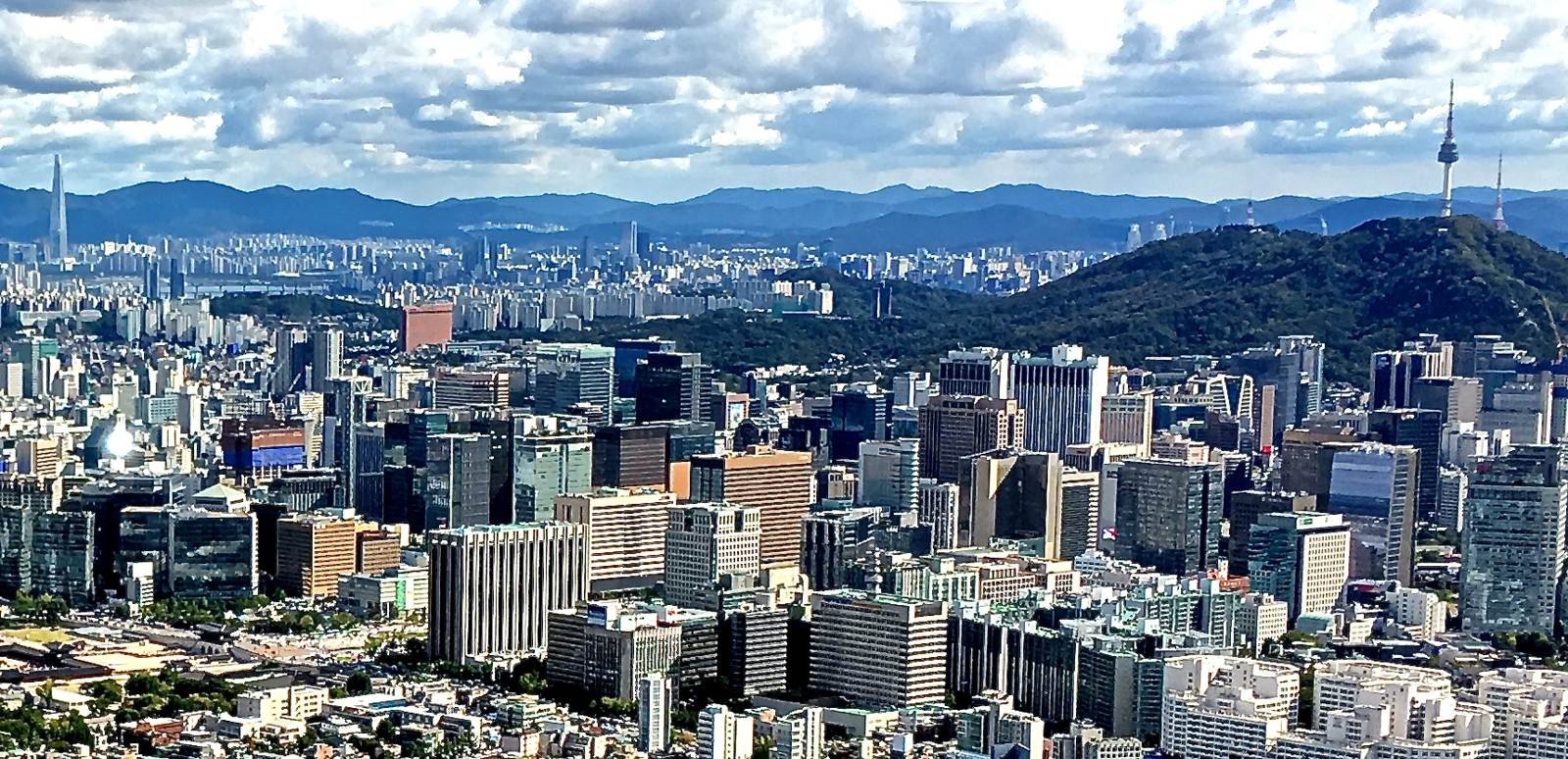
Last checked: October 2026. Entry rules, fares and schedules change, so confirm with the official sources mentioned below before you fly.
Planning your first trip to South Korea from the United States? Before you get into apps, eSIMs and train tickets, it helps to have the big picture: where Korea actually is, how big it is, what the weather does, and what paperwork a US passport holder needs. Think of this as the “start here” page for Curiosity Garden. The numbers below were checked against official or widely used references in October 2026, and we say so when something is an estimate.
Quick facts: South Korea at a glance
| Topic | South Korea | Compared with the US |
|---|---|---|
| Official name | Republic of Korea (ROK) | — |
| Total area | About 99,720 km² (roughly 38,500 sq mi) | Slightly larger than Indiana, a bit smaller than Virginia |
| Population | About 51.5 million (2025 estimate) | Roughly one-seventh of the US population |
| Capital | Seoul, about 9.3 million registered residents | A little larger than New York City |
| Time zone | Korea Standard Time (UTC+9), no daylight saving time | 13–14 hours ahead of New York, 16–17 hours ahead of Los Angeles |
| Language | Korean, written in Hangul | English signs are common on Seoul transit |
| Currency | South Korean won (KRW, ₩) | Rates move daily; check before you go |
| Electricity | 220 V, 60 Hz, Type C/F outlets (two round pins) | US uses 120 V and flat-pin plugs |
| Tipping | Not customary | Very different from US habits |
| Entry (US tourists) | Visa-free up to 90 days; K-ETA exemption through Dec 31, 2026 | A K-ETA is expected to be required from Jan 1, 2027 |
Where is South Korea?
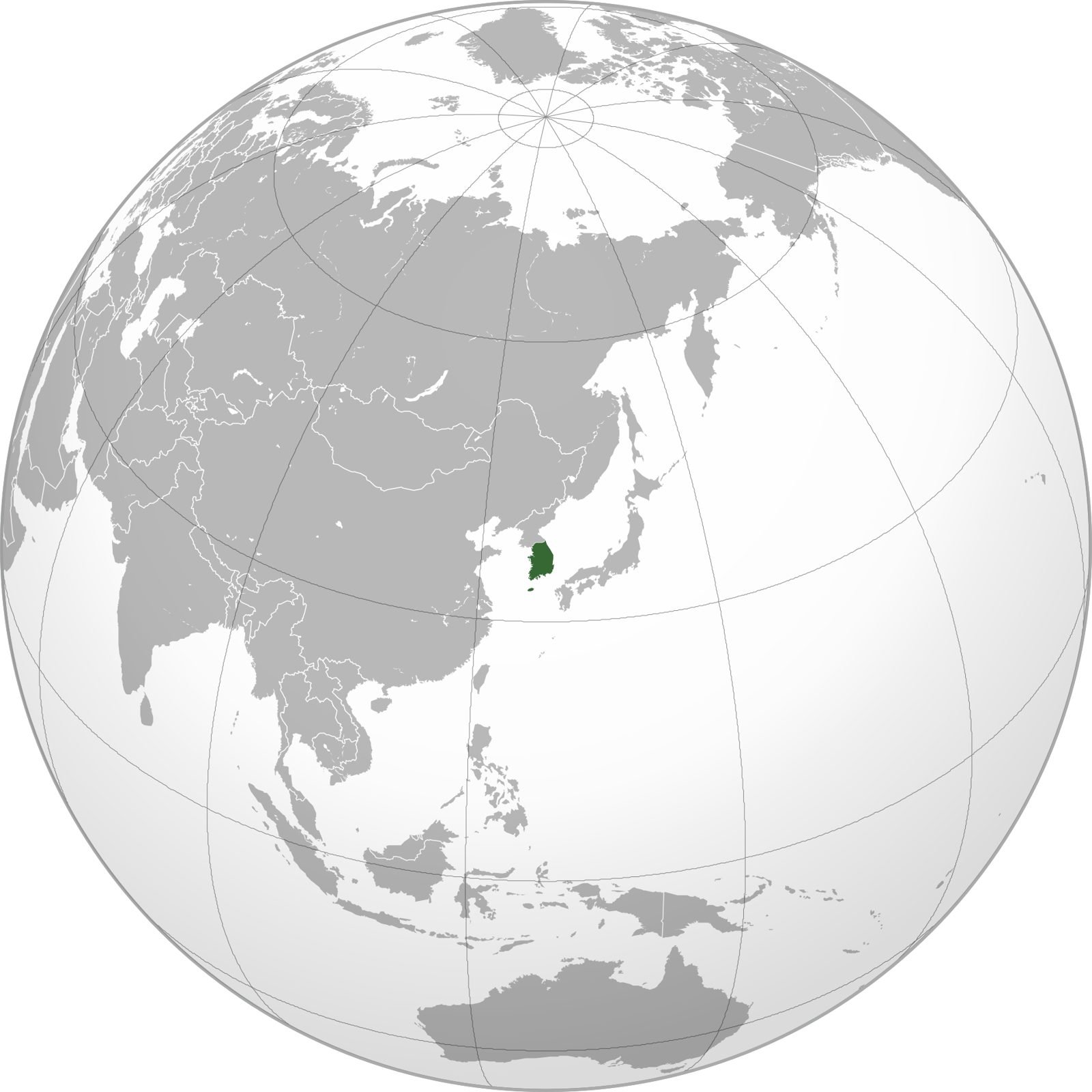
South Korea occupies the southern half of the Korean Peninsula in East Asia. Its only land border is with North Korea to the north, across the heavily guarded Demilitarized Zone, so in practice you will arrive by air or sea. To the west is the Yellow Sea, with China beyond it; to the east is the body of water Koreans call the East Sea (labeled the Sea of Japan on many maps); and to the southeast, across the Korea Strait, is Japan. Busan and the Japanese island of Kyushu are close enough that ferries run between them.
Most US travelers land at Incheon International Airport (ICN), about an hour west of central Seoul. Nonstop flights currently connect more than a dozen US cities with Incheon. Typical scheduled nonstop times we saw in October 2026 were roughly:
- Seattle: about 12 hours
- San Francisco: about 12.5–13 hours
- Los Angeles: about 13–13.5 hours
- Chicago and Dallas: about 14.5–15 hours
- New York (JFK), Atlanta, Washington and Boston: about 15–16 hours
These are approximate block times from airline schedules and fare sites. Actual times vary by airline, aircraft and season, and the flight home is usually one to two hours shorter thanks to tailwinds. Connecting itineraries can add many hours.
How big is South Korea?
The CIA World Factbook lists South Korea’s total area as 99,720 km² (96,920 km² of land), and describes it as “slightly smaller than Pennsylvania; slightly larger than Indiana.” The US State Department puts it another way: similar in size to Virginia. Either comparison gives you the right feel. The country is compact, and that is great news for visitors: the KTX high-speed train links Seoul and Busan, at opposite corners of the country, in around two and a half hours on the fastest services.
It is also mountainous. Much of the land is hills and mountains, which is why cities are dense and hiking is a national hobby. The highest peak, Hallasan, is on Jeju Island off the south coast.
Population, Seoul and the major cities
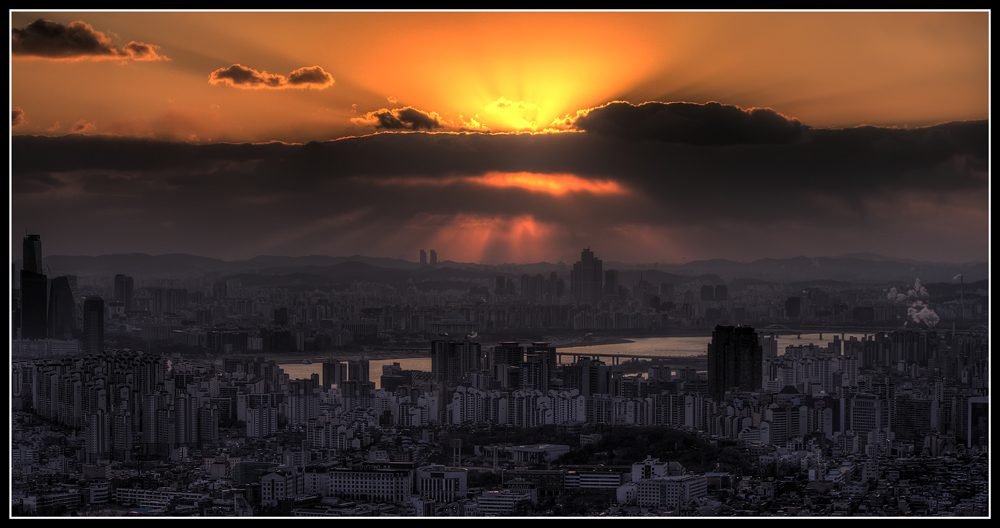
South Korea has about 51.5 million people (CIA World Factbook, 2025 estimate). About half of them live in the greater Seoul area, which includes Seoul itself, the port city of Incheon and the surrounding Gyeonggi Province. Seoul alone had about 9.3 million registered residents at the end of 2025, according to the Ministry of the Interior and Safety resident registration figures.
Cities first-time visitors most often add to a Seoul trip:
- Busan (about 3.2 million): the second-largest city, with beaches, seafood markets and hillside neighborhoods on the southeast coast.
- Gyeongju: the former capital of the Silla kingdom, known for royal tombs and temples. It is an easy side trip by KTX.
- Jeju Island: a volcanic island off the south coast, popular for nature, coastal walks and Hallasan. Most visitors fly there on short domestic flights.
- Incheon, Daegu, Daejeon, Gwangju and Jeonju: each has its own food scene and history, and Jeonju’s hanok village is a favorite.
Climate, seasons and the best time to visit
Korea has four distinct seasons. The Factbook calls it a temperate climate with “rainfall heavier in summer than winter” and “cold winters.” Here is what that means for a trip:
- Spring (roughly April–May): mild days and cherry blossoms, usually in early April in Seoul. A very popular time to visit. Spring can bring hazy or dusty days, so many travelers check an air-quality app.
- Summer (June–August): hot and humid. A rainy season (jangma) usually arrives in late June and runs through July, and late summer can bring typhoons, especially in the south.
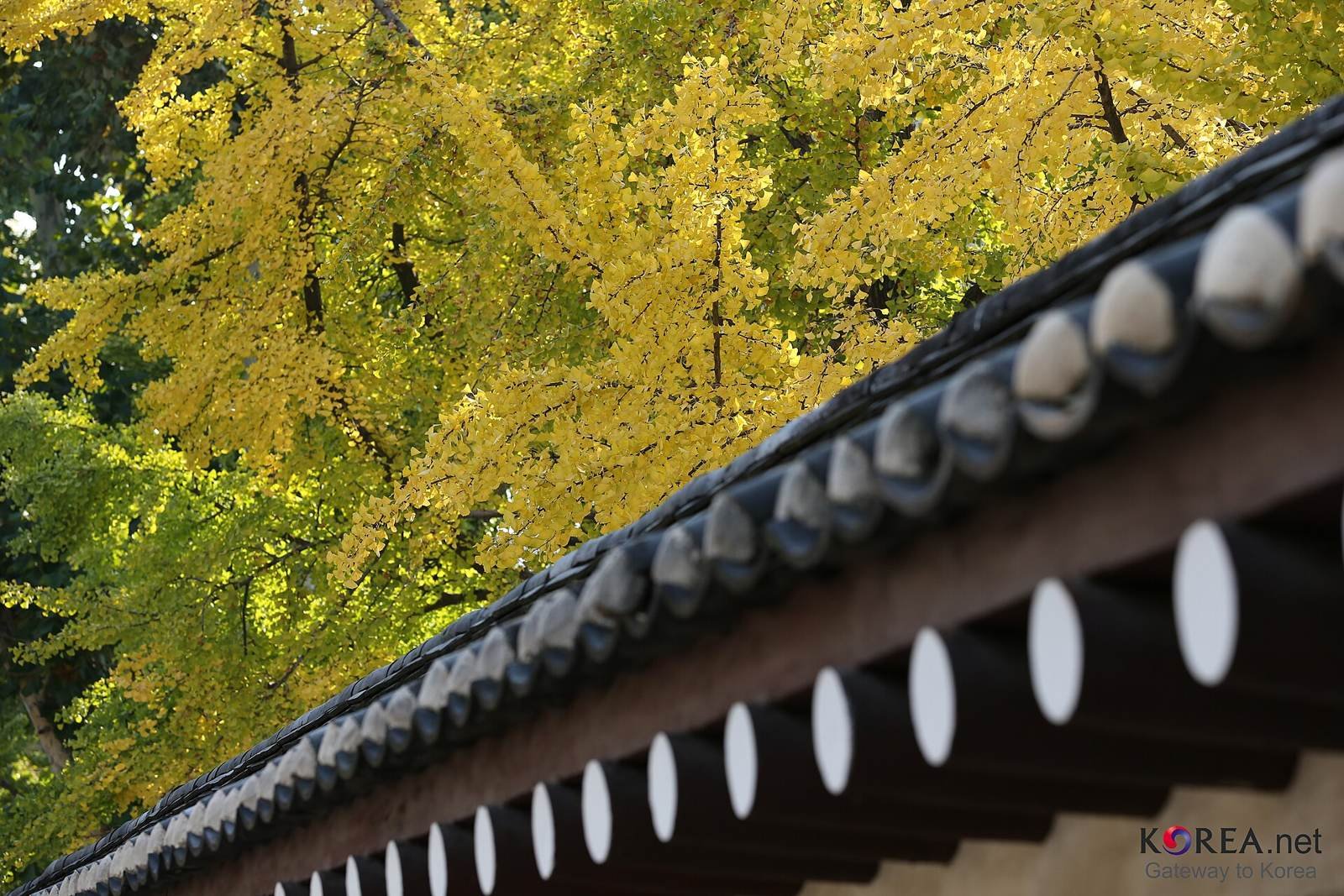
- Autumn (roughly mid-September–November): clear skies, comfortable temperatures and fall foliage, which usually peaks around mid-to-late October and early November. Many people consider this the best season.
- Winter (December–February): cold and dry, with temperatures in Seoul often below freezing. It is a good time for skiing, winter street food and smaller crowds.
If you can choose freely, spring and autumn are the easiest seasons for a first visit. Also check Korean holidays like Seollal (Lunar New Year) and Chuseok (harvest festival), because trains sell out and some shops close.
Time zone
All of South Korea uses Korea Standard Time (KST), UTC+9, and Korea does not observe daylight saving time. So the gap with the US changes when American clocks change. Korea is 13 hours ahead of New York during US daylight saving time and 14 hours ahead in winter. For Los Angeles the gap is 16 or 17 hours. Plan for jet lag: for most US travelers, flying to Korea means “losing” a calendar day on the way out.
Language
The official language is Korean, written in Hangul, an alphabet you can learn to sound out in an afternoon. In Seoul, subway signs, station announcements and many menus include English, and younger people often speak some English. Outside big cities, English is less common. A translation app and a map app built for Korea make a huge difference. Our upcoming guide “Naver Map vs Kakao Map vs Google Maps in Korea” explains why Google Maps works differently there.
Money: the Korean won
The currency is the South Korean won (KRW, written ₩). Exchange rates change daily, so check a live rate rather than relying on a number in a blog post. Cards are accepted almost everywhere in cities, including many taxis and convenience stores. Some market stalls and small shops prefer cash, though, so carry a little. Look for ATMs labeled “Global” for foreign cards. Our “T-money vs Climate Card vs WOWPASS” guide covers transit cards and prepaid travel cards in detail.
Is South Korea safe?
As of October 2026, the US State Department’s advisory for South Korea is Level 1: Exercise normal precautions, the lowest of its four levels. The advisory notes that large demonstrations can happen with little notice and disrupt transport, that tensions on the Korean Peninsula remain high, and that the government runs civil emergency drills throughout the year. Day to day, most visitors find Korea very safe, including late at night in busy areas. Normal city sense still applies: watch your belongings in crowds, avoid protests, and consider enrolling in the State Department’s STEP program. US passport services are available at the US Embassy in Seoul, not at the consulate in Busan.
Visa and K-ETA for US citizens (2026)
This is the part to double-check close to your departure date, because it is changing:
- No visa for short trips: US citizens can visit visa-free for up to 90 days for tourism or business, per the State Department. Work, teaching English and longer stays need a visa.
- K-ETA exemption through December 31, 2026: Korea’s Ministry of Justice extended the temporary K-ETA exemption for the US and some other countries until December 31, 2026 (KST). The State Department says that starting January 1, 2027, US travelers will need a K-ETA before traveling, unless Korea extends the exemption again.
- e-Arrival Card: If you travel under the exemption, you are expected to submit a free electronic arrival card online before arrival. Travelers who choose to get an approved K-ETA (paid) generally do not need to submit the arrival card.
Use only the official sites, k-eta.go.kr and e-arrivalcard.go.kr. Look-alike sites charge extra fees. Your passport should be valid for your whole stay. The State Department lists no specific extra validity requirement, but your airline may have its own rules.
Plugs and voltage
Korea uses 220 V at 60 Hz, with Type C/F outlets that take two round pins (the same shape used in much of continental Europe). US plugs will not fit, so pack an adapter. Most phone, laptop and camera chargers are dual voltage (look for “100–240V” on the label) and only need the adapter. Single-voltage 120 V devices like some hair dryers and straighteners need a converter or should stay home. Adapters are also sold at the airport and in convenience stores.
Tipping
Tipping is not part of Korean culture. Restaurant staff, taxi drivers and hotel staff do not expect tips, and some may be confused if you leave one. Some upscale hotels add a service charge to the bill. Rounding up a taxi fare is a nice gesture but not expected.
Phones, maps and getting around
This post is the overview. The practical details come in our upcoming guides:
- Naver Map vs Kakao Map vs Google Maps in Korea: which navigation app to use and why.
- Best eSIM for Korea: data options for US phones, plus physical SIMs.
- T-money vs Climate Card vs WOWPASS: how to pay for subways and buses.
- How to Book KTX as a Foreigner: high-speed trains to Busan, Gyeongju and beyond.
- Gochujang vs Gochugaru vs Doenjang: a starter guide to the Korean pantry, so menus and grocery aisles make more sense.
FAQ
Do US citizens need a visa for South Korea?
Not for tourism or business stays of up to 90 days. You also do not need a K-ETA through December 31, 2026 (KST), but you should submit the free e-Arrival Card. From January 1, 2027, the State Department says a K-ETA will be required. Check again before you book.
How long is the flight from the US to Seoul?
Roughly 12–13.5 hours nonstop from the West Coast and about 15–16 hours from the East Coast and Atlanta. Times vary by airline and season.
Is South Korea bigger than a US state?
It is about 99,720 km². That is slightly larger than Indiana and a bit smaller than Virginia or Pennsylvania.
What is the best month to visit?
Many travelers prefer April–May and late September–November for mild weather. Summer is hot, humid and rainy, and winter is cold but quieter.
Do I need a voltage converter?
Usually just a Type C/F plug adapter. Check your chargers for “100–240V.” Single-voltage US appliances need a converter.
Should I tip in Korea?
No. Tipping is not customary in restaurants, taxis or hotels.
Sources we checked
CIA World Factbook (area, population, climate); US State Department South Korea travel advisory and country information (advisory level, visa-free stays, K-ETA, size comparison); Korea Immigration Service K-ETA notice and Embassy of the Republic of Korea in the USA (K-ETA exemption through Dec 31, 2026); Ministry of the Interior and Safety resident registration data (Seoul and Busan population); VisitKorea and Visit Seoul (electricity); airline schedules and fare-search sites (flight times). Last checked: October 2026.
Leave a Reply